
In this article
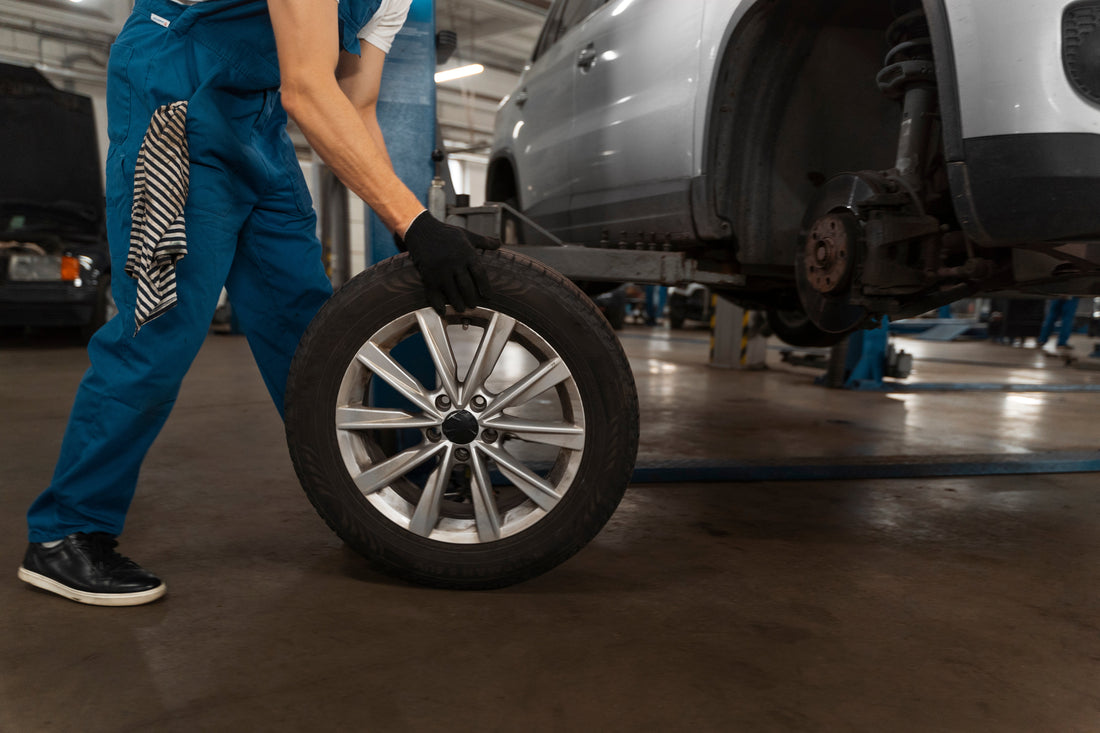
By law, it is necessary to change to winter tyres in time. If you decide to continue driving on them in the summer and "wear them out", that's entirely up to you. However, it is not sensible, and with the arrival of warmer weather, it is better to switch back to summer tyres. When should you do it and what should you watch out for?
Tyre change is regulated by law
If you want to drive a car in late autumn or winter, it is necessary to have winter tyres fitted. An alternative is all-season tyres, but especially in winter, they do not have such good properties, and it is better to rely on true winter tyres. In the Czech Republic, they must be fitted from November 1 to March 31.
However, it can happen that it snows earlier, or the road is icy. In such a case, you should not drive at all on "summer tyres". And similarly, you need to not only look at the date but also monitor the long-term forecast and current weather when changing to summer tyres. If you change tyres in April, nothing happens at all.
When to book an appointment at a tyre service?
Tyre services and garages are very busy in October and April. The sooner you book, the better. As for changing to summer tyres, it doesn't pay to rush too much. Firstly, it is still colder in the first half of April, and frosts may occur, and secondly, garages are busy, and you will wait a long time there. So, if you arrive comfortably in the middle or at the end of the month, you will usually resolve everything much faster and more conveniently.
You can book several weeks in advance. Just as you can choose any service. For those who do not want to constantly carry another set of wheels, the winter tyre storage service may be worthwhile. Thanks to this, you do not have to worry about half of your workshop or basement being full of tyres, and there is no need to transport them anywhere.
If you get a car on operational lease from Birne, you can order this extra service. You will find out which service you can go to, book an appointment in time, and then just have your car's tyres changed. You don't pay anything on site, and the tyre service and Birne take care of everything. Your only task will be to return to the same place before winter to have your winter tyres fitted again.
DIY tyre change can go wrong
Using a tyre service is the easiest and fastest option. However, you will pay for their services. This displeases many people, so they decide to change their winter to summer tyres themselves (and vice versa in autumn). This is not illegal, and with a little skill and strength, you can do it in a few minutes. However, it does have its risks.
When changing tyres at home, first of all, you need to find a suitable place. If you live in an apartment building and park among other cars, it will not be an ideal space for changing tyres. Another disadvantage is that you always have to change a complete set for another complete set this way. Although it is fast, handling tyres on heavy rims is more challenging. In contrast, a tyre service can simply swap only the tyres, which you can never do at home.
The third disadvantage lies in incorrect wheel balancing. A tyre service or car service will ensure that the wheels are correctly balanced after changing to summer or winter tyres. If you do everything yourself, you cannot balance them correctly. And you will find out on your very first drive. You will then face a trip to the alignment shop, which you will have to pay for, whether you like it or not. And the desired savings can thus vanish into thin air.
Detailed tyre inspection
When changing to summer tyres, as well as winter tyres, you should first check if the tyre is in order. If you find any defect, it is better to buy another one instead.
It also applies that tyres should be used for a maximum of 8 years - however, with more frequent driving, this period is significantly shortened. The excessive wear is not the only factor; the rubber also ages and loses its properties over time. Therefore, it is better to dispose of excessively old tyres.
The correct tread depth is also essential. If the tyre is too worn, there is a higher risk of a road collision. The police can even fine you for it during a road check, and in the event of an accident, the insurance company may refuse to pay for the damage. Therefore, it is necessary to regularly check the tread depth.
By law, there is a big difference between summer and winter tyres, plus all-season tyres are also considered:
● Summer tyres must have a tread of at least 1.6 mm. New ones typically have around 8 mm, so anything below 2 mm should be a clear sign for immediate replacement.
● Winter tyres should have a deeper tread, and the minimum is set at 4 mm.
● All-season tyres are assessed according to the current season, and therefore both limits apply to them: 1.6 mm and 4 mm.
You can find out the tread depth either with a special gauge or if you find special protrusions in the tyre grooves that indicate the required minimum depth. This is a so-called wear indicator, and you should never reach it by wearing out the tyre correctly.
Fortunately, with a car on operational lease from Birne, for which you arrange the tyre change service, you don't have to worry too much about this - the car service will notify you directly. Or you will find out during the regular service prescribed by the manufacturer, which is included in the operational lease price.

